Supplemental vehicle information.
Show normalized vehicle data, warnings, trends, and explicit stale or unavailable states on a local display.
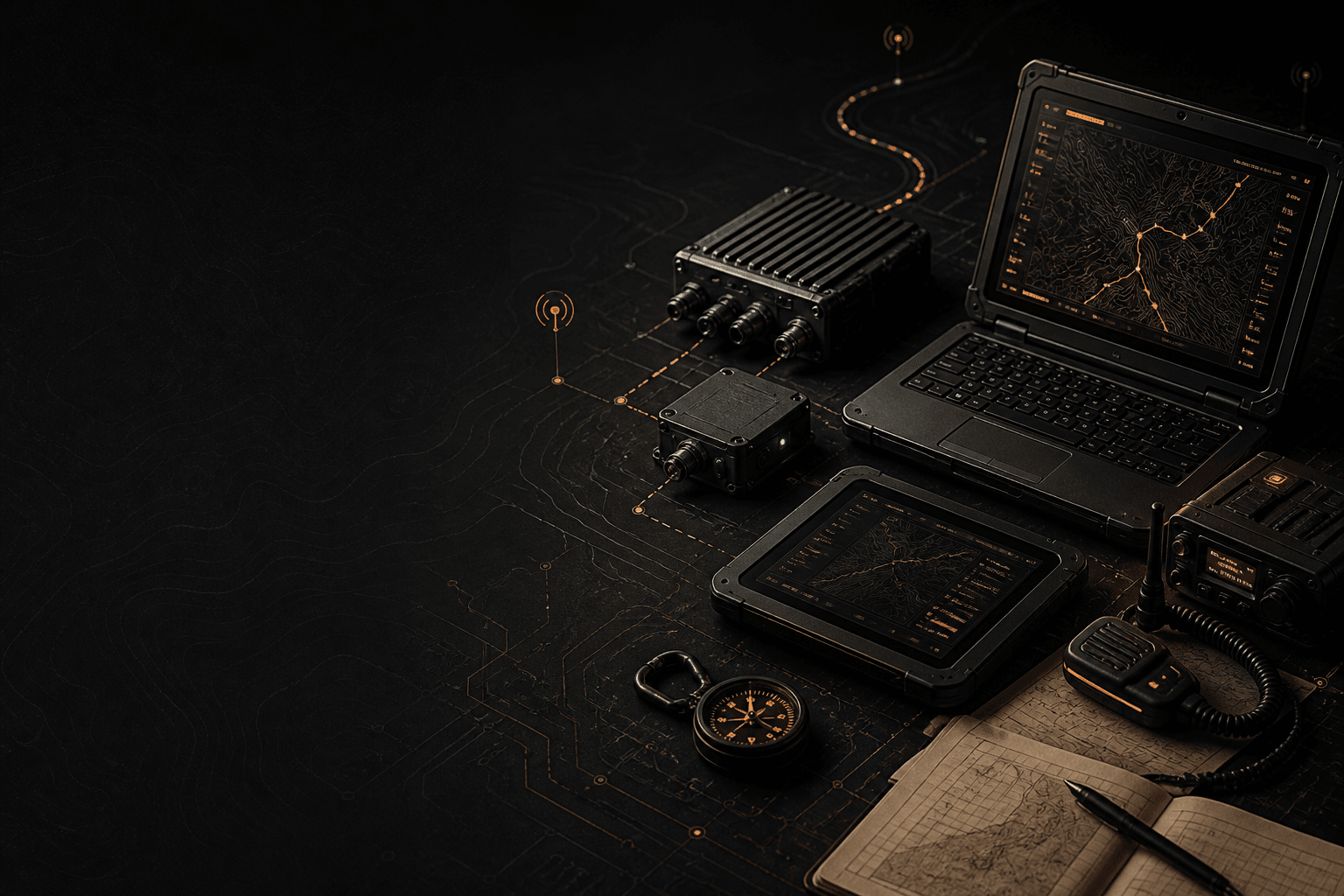
Vehicle data / Supplemental display
A listen-only vehicle gateway and configurable local displays designed to make current, stale, missing, and warning states unmistakable without controlling the vehicle.
Overview
Limited Underground Display is the public project and repository name. Stable OG engineering identifiers remain where compatibility requires them.
Show normalized vehicle data, warnings, trends, and explicit stale or unavailable states on a local display.
Early CAN work has no transmit operation. Gateway or display loss must not affect vehicle operation.
Telemetry, view-model, alarm, and recovery components have automated evidence; no supported physical Limited Underground Display configuration or vehicle field result exists.
Naming boundary: Working identity pending attorney clearance. The public Display identity is intentionally separate from stable OG engineering identifiers and the existing repository route.
Roadmap
Architecture and host-tested components do not become a supported product until exact gateway, display, power, wiring, recovery, and vehicle evidence agree.
CAN/J1939 decoding, signal quality, staleness, alarms, telemetry, layout, and recovery remain host-testable.
Select protected listen-only vehicle hardware, one candidate display, target adapters, power, wiring, and repeatable recovery.
Validate current/stale/missing states, warning behavior, power interruption, thermal and timing limits, and noninterference in an authorized vehicle test.
Capabilities
The current capability is mostly target-neutral and host-tested. Physical rendering and vehicle integration remain separate gates.
Parse bounded frames and normalize selected signals without broadcasting raw vehicle traffic by default.
Nonnumeric quality states cannot silently become plausible gauge values.
Renderer-neutral plans exist for compact round and larger display concepts; pixels and touch remain physical target work.
Use cases
These remain planned product contexts until an exact hardware composition is physically validated.
A small touchscreen can present a focused set of validated signals and conspicuous warning states.
A larger touchscreen may show richer layouts while using the same normalized signal and quality contracts.
Optional integration may exchange documented normalized events, never raw CAN/J1939 traffic by default.
Components
The gateway, display endpoints, radio path, storage, and optional integrations remain separate compositions.
CAN controller/transceiver, protection, power, wiring, and exact target remain unresolved.
Round and larger touchscreen shapes are alternatives, not a single mandatory bundle.
Optional features must fail independently and preserve the supplemental, non-control safety boundary.
Technology
The stack description names implemented foundations and separates them from missing target adapters and physical evidence.
Compatibility
A candidate, matching processor, successful factory demo, or host-tested component does not establish Limited Underground Display compatibility.
Candidate hardware has bounded identification and recovery evidence, but no complete Limited Underground Display firmware, touch, timing, power, heat, or compatibility result.
MCU, CAN controller/transceiver, protection, isolation, connector, power conditioning, and environmental suitability remain open.
No specific vehicle, protocol breadth, road-use result, or regulatory suitability is currently supported.
Development status
Sanitized project evidence updated August 12, 2026. Physical target and field milestones remain visibly separate from host-tested foundations.
CAN abstraction, J1939 parsing, normalized signals, cache behavior, alarms, and diagnostics have broad host-test coverage.
Display-neutral view models, trends, configuration records, and recovery behavior exist without a finished physical renderer.
The bounded gateway path exists in components; target adapters, protected hardware, wiring, and passive vehicle proof remain.
The planned compact gauge experience and display-neutral model are defined, but no physical renderer, touch target, or candidate display has been validated.
Normalized alert and acknowledgement contracts have host and limited three-radio bench evidence across both projects.
No specific vehicle, production power path, physical gauge, interruption test, or road-use result is currently supported.
Demos and downloads
This web visualization shows intended gauge startup, current-data, and stale-input behavior. It is not a rendering of an actual LCD, physical Limited Underground Display runtime evidence, or a firmware download.
WEB GAUGE CONCEPT — NOT A PHYSICAL DISPLAY. The startup timing and sample readings demonstrate intended behavior only. The project has no validated LCD target or vehicle runtime evidence.
Availability: No supported firmware package or validated hardware bundle is offered. Candidate tests and recovery work remain engineering evidence.
Updates
The public percentage comes from the sanitized canonical milestone record. Later hardware characterization does not become support until the relevant acceptance gate changes.
V1 requires a listen-only vehicle gateway and at least one physical gauge that show validated data, stale states, and warnings without affecting vehicle operation.
Bind target adapters, prove recovery, then validate data quality, timing, interruption, power, and noninterference on authorized hardware.
Documentation
The engineering repository records product boundaries, host-tested contracts, candidate hardware, and the physical results still required.
Review the public engineering repository for current architecture, status, and hardware evidence.
Open the source repositoryUse the website demonstration to inspect startup, normal readings, layout choices, and fail-visible stale input.
Open the conceptGitHub repository
The public repository uses the display-project name while stable OG identifiers remain inside compatible technical records.
Architecture, host-tested components, evidence records, and project status are developed in public.
View on GitHubContribute
Useful contributions improve host-testable components, documentation, captured-data legality, hardware safety review, or a clearly authorized physical acceptance step.
Start with current status and project boundaries before proposing hardware, protocol, or interface changes.
Explore the repository